Thursday, March 17, 2011

NEW HOME

Effective today, this blog will no longer be updated.  Please go to the SHOP’s new web address:

http://shop-training.com

Be sure to update your bookmarks, favorites, RSS feeds, etc.

Sunday, January 30, 2011

A GUEST IN THE SHOP

I had the great pleasure of hosting a friend of mine in the SHOP a few days ago.  Bryan Guido Hassin, whose list of credentials is longer than my … well, it’s pretty long:  Rice alum with two undergraduate degrees in Computer Science and Electrical Engineering as well as a Master’s degree in Computer Science, an MBA from IMD in Switzerland, and a successful entrepreneur many times over.  Bryan was in town to pitch his latest entrepreneurial adventure (Smart Office Energy Solutions) to potential investors (I’m already an investor because I believe both in his business and his abilities).

Bryan stayed at my house while he was in Dallas, and of course my house rules clearly state that anyone who spends time in my house must also spend time in the SHOP before departing.  I put Bryan, along with one of the SHOP regulars Craig Stansberry, through a serious workout, and he recapped it in a serious blog post:

INTENSE WORKOUT AT THE SHOP

I love having guests in the SHOP, and not because I get to destroy them with a really hard workout.  For the record, Bryan was exhausted at the end of the workout because he pushed himself that hard.  Some of the movements may have been new to him, but he is no stranger to good, old-fashioned hard work.

Anybody can make someone tired (for example, go do 1,000 pushups), but my purpose with Bryan (or anybody else) was to help him improve.  As he concluded at the end of his blog, he learned three important lessons from just one SHOP workout:  the benefit of early morning workouts, the importance of pre-workout fueling, and the value in anaerobic activities.

Now, for your viewing pleasure, a short clip that shows some of the action.  A few things to note about this video:

a short training montage from the SHOP
  • It was 30 degrees outside (same temp in the SHOP), so we’re all in Under Armour and hoodies.
  • It was 5:15am, so there wasn’t any natural light (plus the garage door was shut)
  • My explosiveness is significantly greater than my other buddy’s (Craig Stansberry, professional baseball player).
  • My Flip camera’s battery was acting up, so we got very little footage from the workout.

That’s all for now.

Sunday, January 9, 2011

A SNOWY SUNDAY IN THE SHOP

REMINDER:  The SHOP has moved!  www.shop-training.com!

It has been snowing non-stop for about the last 3-4 hours!  This is unheard of here in Dallas…although it happened last year too (record snowfall at that).  I don’t think this happened in the previous five years at all!

I had plans to take my Prowler up to JJ Pearce high school with a few buddies…the rain and snow put a stop to that idea though.

prowler

It has been a while since I busted the Prowler out due to holidays and traveling and such, but it’ll be back!

Anyway, the snow may have changed my plans, but I was still able to get a solid training session in.  Today was a heavy focus on soft tissue work (foam rolling, lacrosse ball), flexibility and mobility (primarily hips for me), core work, and finally some conditioning.  It looked like this:

CORE

Turkish Get Ups

Using the TGU as a warm up and mobility drill
2 reps with a 50 lb. DB
1 rep with a 70 lb. KB

Standing Ab Wheel Rollouts w/ Weight Vest (20 lbs.)

6 reps with a 20 lb. weight vest

CONDITIONING

KB Swings x 12

Burpees x 10

Rest 1 minute

Repeat for a total of 5 rounds
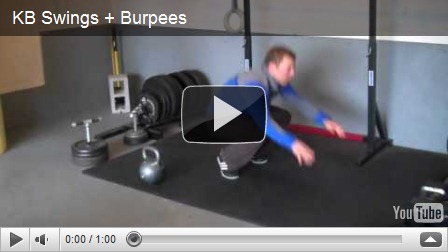
1 round of the KB swings/burpee conditioning


I can’t think of a better way to spend a cold Sunday morning!  Especially since I followed it up with a pumpkin protein shake, a coffee, and some venison roast that I smoked yesterday.

Saturday, January 8, 2011

A SOLID SATURDAY

REMINDER:  The SHOP has moved to www.shop-training.com!

My goal for this blog in 2011 is to hit it hard and hit it regularly.  Obviously it would be nice to post a variety of themed blogs…training-related blogs, book reviews, collections of articles, etc. so I am going to do my best to make that happen.  I’m off to a good start with two blogs on the same day!

As the title indicates, and as Ice Cube would say, today was a good day!

I started out with jiu jitsu practice at 10am for about 2 1/2 hours!  I have big goals for my jiu jitsu training this year.  I want to get my blue belt, I want to train several hours per week, and I want to compete in at least one tournament (whether it will be gi or no gi is to be determined).  I actually spent my time today about 50/50 between gi and no gi.  I also got roughed up pretty good by a purple belt and a blue belt…my face is all scraped up.  When I got home Lauren thought I looked pretty funny and she asked “you actually enjoy this?”  YES, absolutely.

I also got to try out one of my Christmas presents this afternoon…a smoker!

smoker

Using some hickory wood chips I smoked two venison roasts and some backstrap:

meat1

meat2

It was my first time smoking meat, and I my backstrap, which was thin and small, probably got a little too dry (that won’t stop me from eating it).  The roasts, on the other hand, turned out damn good.  Juicy, flavorful, and they will probably only last about another day.

First meat smoking session…a SUCCESS!

HAPPY NEW YEAR!


REMINDER:  The SHOP has moved to a new location!

www.shop-training.com

Don’t forget to update your RSS feed or your bookmarks!  I will post updates to both blogs for a while, but then I will drop this one for good.

Happy 2011!  Hopefully everyone had a Merry Christmas and a Happy New Year!


Lauren and I went to Santa Barbara, CA for the holidays and had a great time.  As you would expect, I got plenty of training in.  Lauren’s aunt even setup a training session for me with an RKC so that I could learn a few kettlebell moves…namely the Turkish Get Up (“TGU”) and the KB Swing.  The TGU happens to be one of my favorite moves now…it trains so many things at one time:  core strength, mobility, stability, coordination.  I personally like to do them without any weight (or with light weight) as part of my warm-up.  On other days, I load them up as heavy as I can for singles or doubles.


One of my buddies from the Rice baseball team is in Dallas and he’s been coming over to the SHOP in the mornings since he is gearing up for Spring Training.  We had a pretty solid session yesterday morning (Friday) that went a little something like this:


A  DB Snatch – 4 x 3 with 100 lbs


B  Single-Leg Squat (Goblet hold) – 4 x 6 with 50 lbs
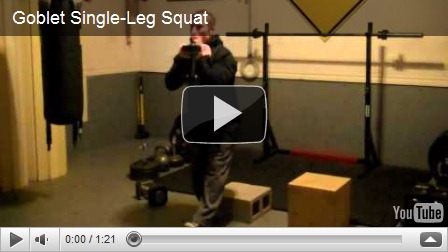
 

6 reps on each leg with a 50 lb DB


C1  Chest Supported Row – 4 x 12 with 100 lbs

C2  DB Lunges (walking) – 4 x 7, 7, 7, 6 with 100 lbs (each hand)


It’s still dark because it’s only 5:30 am! And it’s about 30 degrees!


D  Towel Pullups – 14, 10. 8

E  DB Rows – 3 x 8 with 100 lbs


FINISHER

Mountain Climbers (using furniture gliders under my feet on the carpet)

5 x 20 seconds on the minute


It was a solid session!

Thursday, December 30, 2010

RELOCATING

The SHOP is relocating!

The new blog is still under construction, but I was able to transfer all of my old posts over (with only some minor formatting issues).  I'm still experimenting with appearance, design, etc. on the new site, but it'll get the job done.

www.shop-training.com

Be sure to update your bookmark and RSS reader.

Sunday, August 22, 2010

WHY QUICK, CHEAP FOOD IS ACTUALLY MORE EXPENSIVE

I just read a very good article from the Huffington Post:


The concept here is basically that one cannot only consider the short-term costs of food.  It's not about how much you pay at the cash register, but what that food will "cost" you over your lifetime.  TIME Magazine actually ran an article that talked about this same concept about a year ago:

There are some great take-away points from both articles (which I'll include later in my FAVORITE EXCERPTS section), but each of these articles can be summed up in the following way:

You will spend both time and money on your health, and you get to choose whether your time and money are spent proactively or reactively.

Now I'm not going to steal credit for that quote.  I read it from one of Mike Boyle's blog posts, but I'm not sure if he was the creator.

FAVORITE EXCERPTS
The odd paradox is that food insecurity--not knowing where the next meal is coming from or not having enough money to adequately feed your family--leads to obesity, diabetes and chronic disease.

And most of those meals eaten at home are produced in plants, not grown on plants, are from a food chemist's lab, not a farmer's field.

Unhealthy food is cheaper because our government's policies support its production. We're spending nearly $30 billion a year to subsidize corn and soy production. Where do those foods go? Into our food supply as high-fructose corn syrup and hydrogenated soybean oil (trans fats), that are the foundation of almost all fast food and processed foods that are "manufactured" by the food industry.

Corn and soy are also used to feed cattle for the production of meat and dairy. In fact, 70 percent of the wheat, corn and soy farmed in this country is used to feed animals used for our food. The world's cattle alone consume a quantity of food equal to the caloric needs of 8.7 billion people--more than the entire human population on Earth!

...one expert has estimated that healthcare costs related to obesity are $118 billion per year. That's nearly 12 percent of total healthcare expenditures--and more than twice that caused by smoking! Seventy-two percent of Americans are overweight and over one third are medically obese. One in three children born today will be diabetic in their lifetime and the life expectancy of our population is declining for the first time in human history.

As these numbers prove, the costs of eating fast, junk, and processed foods are often deferred until later. And that's the key point: When you go to McDonald's for a cheap burger and fries, you might immediately compare that lower price to whole organic foods which are more expensive in the short term. But the total cost isn't reflected in how much you pay for your meal in the immediate moment, it's the cumulative cost of what those decisions cost you over a lifetime.

Sunday, August 8, 2010

SATURDAY IN THE SHOP

It's been a while since I did a training update, so now seems to be as good a time as any!  I didn't start working out yesterday until about 3:00pm, so it was nice and toasty in The SHOP (probably 102 degrees outside and very comparable inside my garage).  Oh well, I had two fans blasting on me and plenty of fluids so I was fine.

Yesterday was a strength day that went something like this:

WARM-UP
Foam Rolling
Static Stretching
Mobility Drills and Activation work (namely the glutes)

STRENGTH
A Bulgarian Split Squats - 185 x 6, 6, 6, 6 (each leg)

B1 Sandbag Shouldering - 6, 6, 6, 6 (I'm guessing my sandbag is about 150 lbs or so)

B2 T-Bar Row - 90 x 12, 12, 12, 12
C1 Band Hip Abduction - Mini band x 17, 17, 17 (more glute work and hip strengthening)
C2 Pullups - 13, 10, 9

D Band Rows - Black Band x 10, 10, 10

For my post-workout recovery I had a gigantic shake and then a dip in our neighbor's pool!  It feels so good to jump in the pool after a workout, especially when it is over 100 degrees outside!

Saturday, August 7, 2010

OBESITY RATES IN THE USA

I read another interesting article in the NY Times yesterday:

Obesity Rates Keep Rising, Troubling Health Officials

There are now 9 states that have obesity rates greater than 30% (Alabama, Arkansas, Kentucky, Louisiana, Mississippi, Missouri, Oklahoma, Tennessee and West Virginia), with the national average coming in at 26.7%!  That means 72.5 million people in the United States are considered obese.


The real scary thing is that the data was collected by telephone surveys of 400,000 people.  The simple survey consisted of asking them their height and weight.  Maybe I'm a skeptic, but I seriously doubt that people really gave accurate information, and I tend to think that people would underestimate their true weight.  Just think what the real numbers could be!!


Now just to be fair, the researchers used BMI to determine if these people are obese, and BMI is not really a good measure (it is just a function of height and weight and ignores things like muscle mass).  It may work well for a large scale research project, but at the individual level it simply is not the best approach.  For instance, my BMI (I'm 5'11" and 195 lbs) is 27.2 which puts me right in the middle of the "overweight" category (obese is greater than 30.0).  HINT: I'm not overweight.

What's probably the most disheartening thing about this article is that the annual medical cost of obesity is estimated to be $147 billion!

FAVORITE EXCERPTS
Researchers blame the usual suspects: too little exercise and too much of the wrong kind of food, which means not enough fruits and vegetables and too many high-calorie meals full of sugar and fat, like French fries, soda and other sweet drinks. Children do not get enough exercise during the school day; Dr. Frieden noted that even in gym classes, students are active for only about a third of the time.

The nine states with obesity rates of 30 percent or more are Alabama, Arkansas, Kentucky, Louisiana, Mississippi, Missouri, Oklahoma, Tennessee and West Virginia. The highest rate, 34.4 percent, was in Mississippi.

Only Colorado and Washington, D.C., had obesity rates under 20 percent. Researchers are not sure why. Dr. William Dietz, director of the nutrition, physical activity and obesity division, said that Colorado had spent money from a state lottery on biking and walking trails and that many people were using them. The state seems to have “a culture of physical activity,” he said.

Friday, August 6, 2010

LOADING BODYWEIGHT MOVEMENTS

In previous posts I've talked about the need to progress bodyweight movements by using more difficult variations (1-arm pushups instead of regular pushups, 1-leg squats instead of regular squats, etc.).  Of course when I say "the need" I am assuming that someone who is training in the first place is looking to actually improve.  If you don't progress, why the heck are you training?

Anyway, those were a few examples of how you could progress those movements without any extra equipment.  However, if you happen to have a fully-loaded SHOP like I do, you can simply perform the movements with added resistance like a weight vest!!

1-LEG SQUATS W/ WEIGHT VEST (45 LBS)


PUSHUPS W/ WEIGHT VEST (75 LBS)
Feet elevated and hands on blocks for greater ROM


I love the weight vest, and it can be added to virtually any movement:  pushups, squats, pullups, dips, lunges, etc.

I'm not saying anybody needs to go out and buy one, but for those who may be interested this is probably the best place to look:

WEIGHT VEST

And no I will not receive any commission if you go there, I'm just really happy with the product I have from them so I wanted to share the love!

And yes, I did shave my head!

Wednesday, July 28, 2010

VITAMIN D

There was a great article online the other day at the NY Times:

What Do You Lack? Probably Vitamin D

WHAT IT IS AND WHY IT IS IMPORTANT
From Wikipedia (with my comments in [brackets]):
Vitamin D is a group of fat-soluble secosteroids [A, E, and K are the others]….  Vitamin D3 is produced in the skin of vertebrates after exposure to ultraviolet B light from the sun or artificial sources, and occurs naturally in a small range of foods.

When synthesized in the kidneys, calcitriol circulates as a hormone, regulating, among other things, the concentration of calcium and phosphate in the bloodstream, promoting the healthy mineralization, growth and remodeling of bone, and the prevention of hypocalcemic tetany.  Vitamin D insufficiency can result in thin, brittle, or misshapen bones, while sufficiency prevents rickets in children and osteomalacia in adults, and, together with calcium, helps to protect older adults from osteoporosis.  Vitamin D also modulates neuromuscular function, reduces inflammation, and influences the action of many genes that regulate the proliferation, differentiation and apoptosis [programmed death] of cells

“Fat-soluble” means that these vitamins must be dissolved in fat before they can be absorbed in the bloodstream and carry out their vital functions.  Also, any excess of these fat-soluble vitamins are stored in the liver, which means that they are not needed on a daily basis (that doesn’t mean it’s not a good idea to get them daily though).

From the NY Times article:
Every tissue in the body, including the brain, heart, muscles and immune system, has receptors for vitamin D, meaning that this nutrient is needed at proper levels for these tissues to function well.

HOW TO GET IT
Primary Source:  the sun (more specifically, ultraviolet B rays absorbed through the skin)


Other Sources:  wild-caught oily fish (salmon, mackerel, bluefish, and canned tuna) and fortified dairy products and cereal.

HOW MUCH TO GET
The article quoted some recommended serum levels of vitamin D (>30 nanograms/milliliter), but that means you have to get a specific blood test to determine your current level and a follow-up test to see if you then exceed the minimum level.  Instead just follow this simple advice to ensure adequate levels:

Regular, but not excessive, sun exposure during peak sunlight hours (10 AM – 3 PM), unprotected by sunscreen.  If you stay outside for longer than about 10-15 minutes, then you can apply some sunscreen.

Can’t I just supplement?

While I do take a supplement, I keep it at a constant but minimum level.  The dosage I take would not be enough to meet the minimum suggested serum level alone.  Further, if acquired naturally through skin, the body has a built-in cutoff system that prevents excess levels of vitamin D.  When enough is made, further exposure to sunlight will destroy any excess.  If the source is an ingested supplement, it goes directly to the liver with no cutoff mechanism to prevent excess levels.

In addition to the supplement, I also regularly eat wild salmon, tuna, and other fish that are natural sources of vitamin D.

I still try to make sunlight my main source.  As a guy stuck in the office all day, it can be difficult to get outside during peak sunlight hours without getting yelled at!  So I just make a concerted effort to get outside whenever possible:  walking the dogs, throwing the football with Lauren, or even taking my SHOP workouts outside of the garage and into my driveway or the alley!

CONCLUSION
Get some dang sunlight!

FAVORITE EXCERPTS / MORE FOOD FOR THOUGHT
Although more foods today are supplemented with vitamin D, experts say it is rarely possible to consume adequate amounts through foods.

But the less sun exposure, the darker a person’s skin and the more sunscreen used, the less previtamin D is formed and the lower the serum levels of the vitamin.  People who are sun-phobic, babies who are exclusively breast-fed, the elderly and those living in nursing homes are particularly at risk of a serious vitamin D deficiency.

Such low levels could account for the high incidence of several chronic diseases in this country, Dr. Holick maintains.  For example, he said, in the Northeast, where sun exposure is reduced and vitamin D levels consequently are lower, cancer rates are higher than in the South.  Likewise, rates of high blood pressure, heart disease, and prostate cancer are higher among dark-skinned Americans than among whites.

ADDITIONAL INFO

Monday, July 26, 2010

MARATON DE RIO DE JANEIRO - UN RESUMEN DE LA CARRERA


**This is a guest post from my sister, who just competed in the Maraton de Rio de Janeiro with her husband Federico**

You can find my other Race Reports HERE, HERE, and HERE.


Hola - from Argentina! Drew asked me to recap my race report, so here it goes... Federico & I ran the Rio de Janeiro Marathon (42Km) on July 18, 2010. Official Time: 4 hours 18 minutes 32 seconds (which is approximately 6 minutes per km). Not bad if I say so myself!


We decided we would embark on a 23 week training program and run the marathon crossing the finish line together (the couple who runs together, stays together!). Before I get into to the training & the race, I want to tell you that this whole experience has been something we will always look back on and think "we did it!... together!!" We selected the Rio marathon based upon the view of the beach, not too many inclines, a cool course/ experience, and a great excuse to go to Brasil.


As our Valentines Day gift to each other, we decided to start training on February 14! Here is a look at the breakdown of our "Distance Days"


1/ Feb 14 - 3 miles, 5 K
2/ Feb 21 - 3 miles, 5 K
3/ Feb 28 - 5 miles, 8 K
4/ March 7 - 5 miles, 8 K
5/ March 14 - 4 miles, 6.4 K
6/ March 21 - 6 miles, 9.6 K
7/ March 28 - 8 miles, 12.9 K
8/ April 4 - 10 miles, 16 K
9/ April 11 - 8 miles, 12.9 K
10/ April 18 - 10 miles, 16 K
11/ April 25 - 12 miles, 19.3 K
12/ May 2 - 10 miles, 16 K
13/ May 9 - 14 miles, 22.5 K
14/ May 16 - 12 miles, 19.3 K
15/ May 23 - 15 mile, 24.1 K
16/ May 30 - 18 miles, 29 K
17/ June 6 - 12 miles, 19.3 K
18/ June 13 - 18 miles, 29 K
19/ June 20 - 14 miles, 22.5 K
20/ June 27 - 21 miles, 33.8 K
21/ July 4 - 15 miles, 24.1 K
22/ July 11 - 13 miles, 20.9 K
23/ July 18 - RACE DAY, 26. 2 miles, 42 K


This is the same "Distance Day" training schedule I used for my first marathon in 2007.  I think this is a friendly schedule if you are not in the recent habit of running for over an hour comfortably. I might have used the same outline for my long distance days, however I made many changes in general training.  The biggest and most helpful change would be that I lift weights.  This is HUGELY important.  You do not train for a marathon by just running.  You MUST lift weights.  Your training (lifting & running) will vary as you go further into it, and you will have to adjust as your body responds to the many changes and demands.  I consulted Drew many times throughout my training to ensure my weigh lifting was "SHOP-approved"... I can say that for me, the squats had the biggest impact on my leg strength.  I have also recently dominated 75 push-ups, but that's a different blog!  23 weeks of training can be very monotonous, so make sure you add variety to spice things up.  Not only did my "SHOP-approved" weight lifting improve my race time by over 30 minutes (that's right - 35 minutes people! I crushed my first time), but it also improved my general health of my joints and ability to recuperate faster after long runs.  I previously experienced more knee pain, and longer periods of soreness after running.  This training I was able to bounce back sooner, and just dominate as well.  Thanks SHOP!


There is not one secret that works for everyone... just push yourself (on your runs, and in the gym), and listen to your body and make adjustments.

OK - now for the race day report!

We arrived to Rio on the 16th to some seriously stormy weather.  Thank goodness we had so many rainy training days!  We were very nervous about the weather.  One thing is to run in a little rain, it is another to run a race in fierce winds and torrential downpour!  Luckily, the rain stopped for the race!  Whew!

We woke up at 4am, and were at the bus by 5:15 am to take us to the start line.  The bus ride was about an hour long and took us to Recreio where we waited for over an hour.  It was quite chilly outside, so we hunkered down next to a heater.

The race started at 7:30 am, and we were off!  I was unfortunately already starving by 8am since I had breakfast at 4am (next time bring a snack).  Every course is different, and no matter what you prepare for, there will always be surprises that serve as more of a mental challenge than a physical challenge.  For example: the approximate 3-4 kilometer stretch where there was cobblestone every ten steps you took.  I hated this, and it made this stretch take forever (and at such an early part of the race).  But, we had constant views of the beach, which were quite nice.


The longest distance we trained to was 34 kilometers (21 miles), so we often hit a distance of 20 kilometers.  I felt so strong at the halfway mark.  I was mentally strong, and felt my legs just powering away.  The course was completely flat thus far, so we hadnt experience any "challenges" yet.  The only course surprise we had received was the total lack of crowd support.  There were no cheering stations, or cool shows set up.  We thought for sure there would be a "Carnaval Station" and a "Samba Station"... but no!  Thank God for the iPods!

Sailing through kilometer 22


This was both of our favorite part of the race.  Incredible views, and just feeling good (approx kilometer 24).

Sorry for the fuzzy pic - I was running you know!
 Federico and I both hit a slump around kilometer 33 when we entered Ipanema Beach.  I am not sure if it was the recent incline that took some steam out of me, or just some other reason.  Luckily we know better than to tell each other "I am dying", as the feeling of dying is contagious!  So, as I was dying, I looked at Federico who seemed perfect - and vice versa.  We made it through.  I knew once we hit the Copacabana we were so close to being there.  I was so focused on the need to see the final stretch that I dont think I once looked (or cared) about the beach while in Copacabana.  Ha!  Also, my power song came on just in time to get me going again!  Thank you Muse "Uprising"!


Once we hit the home stretch, we were so excited.  Every amount of pain that you feel in your legs disappears (momentarily) and you just love it.  We grabbed hands and raised them as we crossed!  WE DID IT!


Rocking the SHOP t-shirt with the Marathon Medal at the Corcovado - Cristo Redentor

Saturday, July 24, 2010

CHANGES TO DISD SCHOOL LUNCHES

Lauren and I get a weekend edition of the Dallas Morning News (it's free, so I think everybody gets it), and there was a really interesting article in it yesterday:


FAVORITE EXCERPTS
So long, nachos.  Hello, brown rice.  Dallas school students can also say goodbye to high-sugar cereals, potato chips and sundry other snacks when they return to school this fall.
Finally!  Not that school lunches have any impact on me since I don't have any kids, but this at least shows that somebody is paying attention and making things happen.  This new system still may not be perfect, but who could argue that taking nachos off the menu isn't a step in the right direction!
The marching orders to improve children's nutrition come from the top. First lady Michelle Obama has made the issue a hallmark of her office, and the U.S. Agriculture Department has a competition encouraging schools to offer more nutritious food.
I am absolutely not going to get into a political debate, but this is a move that I will applaud.
Hamburgers and oven fries will be offered only once every two weeks at the middle school and elementary level. And breaded and pre-fried foods will be on the menu more sparingly.  New items will include black bean burgers, hummus plates and Asian chicken bowls.  Romaine lettuce and spinach will take the place of iceberg lettuce in salads.  Brown rice will replace white rice.
Just like with most things, to truly make change it must be addressed via progressions.  Rather than eliminating fries, they will bake them in the oven vs. deep-frying them and they will serve them less often.  Continue to serve burgers, but instead of beef (low-quality, most likely) all the time mix in some black bean burgers.  Iceburg lettuce = waste of space.  So seeing this get replaced with spinach and romaine is a wonderful thing.  Over time, significant changes will definitely take place.
The healthy upgrades do come at a price. DISD already spends about $80 million each year providing 120,000 lunches, 46,000 breakfasts and 10,000 after-school snacks. The new menu's food and supplies could cost up to an extra $3 million this year, said Brad Trudeau, the district's director of food production and procurement.
Sure $3 million is a lot of money, but let's be honest, it only represents a 3.75% cost increase over the previous year and an infinite improvement in quality.  We can't even begin to calculate the costs saved in other areas such as a reduction in the childhood obesity epidemic, future healthcare costs saved for these children, and so on.

Bravo DISD.

EATING TO LIVE OR LIVING TO EAT?

I was on a plane about two weeks ago coming home from Minneapolis, and I saw the guy in front of me reading the Wall Street Journal.  On the front page of the “Personal Journal” was the following article:

Eating to Live or Living to Eat?
Stomach vs. Brain:  Discovering Why Some People Can Resist Dessert While Others Can’t

Needless to say, it caught my attention.  When he was done reading it I asked him if I could take a look.  If he objected, I was going to take it anyway and then kick his ass for being a jerk.  Luckily for him, he didn’t object.

The premise behind the article was actually very interesting (why are some people “able” to resist dessert while others are seemingly “unable”).  They also used a scenario that hits very close to home…the office birthday party!  Ever since I entered corporate America, I have been “that guy” who never eats cake or brownies at someone’s mid-afternoon birthday celebration.  And I always get chastised for it, but it doesn’t bother me.  I actually enjoy it!  (Quick tangent:  for my birthday, some of my co-workers served raw veggies, hummus, and fruit, and everybody destroyed it and raved about how good it was.  For the next birthday, though, it was back to cake…how disappointing)


Basically what the article tells us is that there are two systems that govern hunger cues, the homeostatic system and the hedonic system.

Eating for Survival – The Homeostatic System
This system controls signals from your body to indicate that your body is lacking in something such as water, nutrients, or energy.

Eating for Pleasure – The Hedonic System
This system is governed by the reward system in your brain.  Simply seeing or smelling a food can result in the release of dopamine, which is a neurotransmitter that has many roles in the brain, one of which is reward.

FAVORITE EXCERPTS
Scholars have understood the different motives for eating as far back as Socrates, who counseled, ‘Thou shouldst eat to live, not live to eat.
Socrates:  Born 469 BC, Died 399 BC.  That’s a long time ago, but he was obviously onto something!

This reminds me of another of my favorite quotes, also from a Greek (but a physician, not a philosopher) who lived around the same time as Socrates:

“Let thy food be thy medicine and thy medicine be thy food.”
-Hippocates, known as the father of Western medicine:  Born 460 BC, Died 377 BC.
‘When obese people see high-calorie foods, a widespread network of brain areas involved in reward, attention, emotion, memory and motor planning is activated, and all the areas talk to each other, making it hard for them to resist,’ says Susan Carnell, a research psychologist at the New York Obesity Research Center at Saint-Luke's-Roosevelt Hospital and Columbia University and one of the investigators.
I really dislike this comment.  Perhaps this is truly a “chicken or the egg” scenario, but I doubt it.  The researcher gives the impression that obese people react differently to seeing the foods simply because they are obese.  I tend to believe that certain people react differently to seeing foods and as a result (over time) they have become obese.
Studies have found that a diet of sweet, high-fat foods can indeed blunt the body's built-in fullness signals.  Most of them emanate from the digestive tract, which releases chemical messengers including cholecystokinin, glucagon-like peptide and peptide YY when the stomach and intestines are full.  Those signals travel up to the brain stem and then the hypothalamus, telling the body to stop eating.
This concept was the main premise behind the book The End of Overeating.  More specifically, how the food industry manipulates the combination of sugar, fat, and salt in foods to influence the quantity of food people eat.
Obesity also throws off the action of leptin, a hormone secreted by fat tissue that tells the hypothalamus how much energy the body has stored.  Leptin should act as a brake against overeating, and it does in normal-weight people.  But most obese people have an overabundance of leptin, and somehow their brains are ignoring the signal.  All these findings beg the question, which came first? Does obesity disrupt the action of leptin, or does a malfunction in leptin signaling make people obese?
…are some people obese because their brains overreact to tempting food, or do their brains react that way because something else is driving them to overeat? Researchers at Yale and elsewhere are turning to such questions next.  ‘It's possible that these changes reflect how the brain has adapted to eating patterns in obese people, and that could create a vicious circle, putting them at risk for even more disordered eating,’ says Dr. Small.